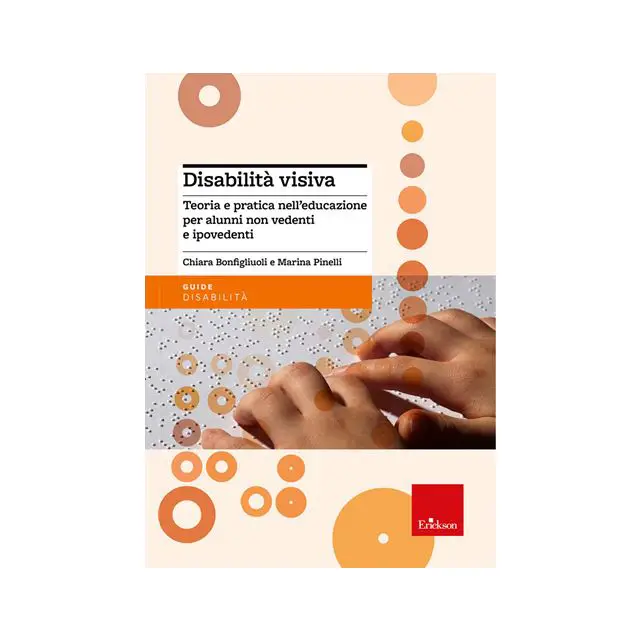
Visual Disability


PRODUCT CODE: D83081
EAN: 9788861376168
Look it up in the nursery and early childhood catalog
Look it up in the primary and secondary catalog
Look it up in the primary and secondary catalog
- ✅ Comprehensive guide for the education of blind and visually impaired pupils, with developmental approach and attention to special needs.
- ✅ Systematic analysis of language, motor and social development in children and young people with visual impairment.
- ✅ Integrates theory, experimental research and educational practices to offer concrete strategies for practitioners and teachers.
- ✅ Provides easily applicable operational insights to foster student autonomy, inclusion and personal growth.
- ✅ Suitable for those working in the field of visual impairment and inclusive education; also useful in cases of motor and sensory disorders.
VARIANTS


Full description
Visual Disability
Theory and practice in education for blind and visually impaired pupils
Un manuale completo che offre una guida chiara e sistematica per educatori, insegnanti e operatori che lavorano con bambini e ragazzi non vedenti o ipovedenti, integrando teoria, ricerca e pratiche educative concrete.
Autori: Marina Pinelli, Chiara Bonfigliuoli
Obiettivi del libro
- Fornire conoscenze teoriche sullo sviluppo linguistico, motorio e sociale di alunni con disabilità visiva
- Presentare risultati della ricerca applicata in contesti educativi
- Proporre strategie e attività pratiche e replicabili nella scuola e nei contesti di sostegno
- Supportare l’educatore nella costruzione di percorsi personalizzati e inclusivi
Struttura del volume
- La teoria: approfondimenti sullo sviluppo linguistico, motorio e sociale dei bambini non vedenti o ipovedenti
- La ricerca: contributi sperimentali che integrano attività educativa e risultati scientifici
- La pratica: indicazioni operative, strategie e spunti concreti per insegnanti e operatori
A chi è rivolto
- Insegnanti e operatori della scuola primaria e secondaria
- Educatori specializzati in disabilità visive
- Famiglie interessate a strategie pratiche di supporto educativo
- Professionisti che desiderano integrare ricerca, teoria e pratica nella didattica per alunni non vedenti o ipovedenti
Product details.
Argomento:
- Disabilità e Autismo - Integrazione sociale/lavorativa e autonomia personale e vita familiare
- Educazione e didattica - Metodi e teorie - Metodologie di recupero e sostegno
Formato: 17 x 24 cm
Pagine: 176
ISBN: 978-88-6137-616-8
Collana: Le GUIDE
Disabilità Visiva è una risorsa preziosa per costruire percorsi educativi inclusivi, efficaci e basati su evidenze scientifiche, pensati appositamente per alunni non vedenti o ipovedenti.